
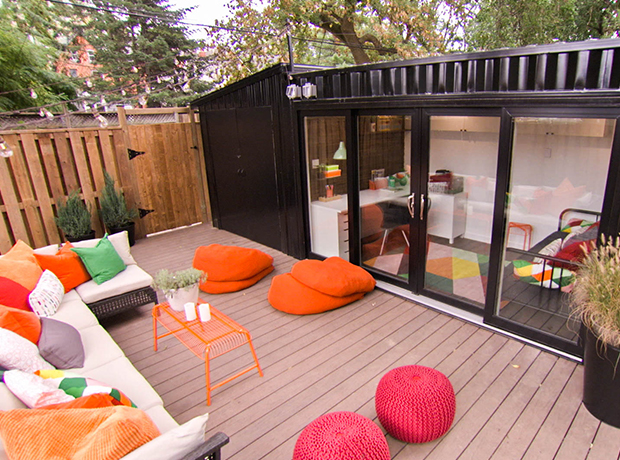
For homeowners dealing with an overflowing garage, a shed that has outgrown its purpose, or a backyard renovation with no place to put things, a shipping container offers a practical alternative to conventional storage options. The appeal is straightforward: a steel container is weatherproof, secure, lockable, and built to outlast most structures a homeowner would otherwise consider.
But buying a container for residential use comes with a set of considerations that do not apply to commercial or industrial buyers. Placement, appearance, local regulations, and neighbour relations all factor in. Getting those details right before the container arrives makes the difference between a useful long-term asset and an expensive headache.
What Homeowners Typically Use Containers For
The most common residential use case is overflow storage: seasonal items, sporting equipment, tools, garden machinery, and household goods that do not fit inside the home or existing garage. A container handles all of these well. Steel construction means no rot, no pest intrusion, and no concern about the roof failing under snow load the way a wood-frame shed might.
Beyond basic storage, homeowners use containers as dedicated workshop spaces, hobby rooms, home gym foundations, and backyard studios. These conversion applications require more planning and upfront investment but produce a genuinely functional structure at a fraction of the cost of a purpose-built addition or outbuilding.
Some buyers use a container temporarily during a home renovation, as a secure on-site storage unit for materials and valuables while the house is open to contractors. This is a legitimate short-term application, though it raises the rent-versus-buy question that depends on how long the renovation is expected to run.
Size Considerations for Residential Placement
The 20ft container is the most practical choice for most residential properties. It fits on a standard driveway, requires less clearance for delivery, and provides enough storage volume for the majority of household overflow needs without dominating the yard.
A used 20ft container offers approximately 150 square feet of floor space, which is comparable to a mid-size garden shed but with far superior weatherproofing and security. For most homeowners, that footprint is sufficient and avoids the site preparation challenges that come with larger units.
The 40ft container nearly doubles that floor space and suits buyers with larger storage volumes, hobby or workshop needs, or properties with enough room to accommodate it comfortably. The delivery logistics for a 40ft unit are more demanding, particularly on residential streets where truck access may be limited, so site assessment matters more at this size.
Checking Local Regulations Before You Order
This step is non-negotiable and must happen before any purchase is made. Zoning rules for shipping containers on residential properties vary significantly between municipalities, and assuming it is permitted simply because neighbours have one is not a reliable approach.
Most municipalities treat shipping containers as accessory structures, similar to sheds or detached garages. Regulations commonly address:
- Whether a permit is required and what the application process involves
- How long a container may remain on a residential property
- Setback requirements from property lines, fences, and the main dwelling
- Whether the container must be screened from the street or neighbouring properties
- Height restrictions that might affect high cube containers
Rural properties typically face fewer restrictions than urban or suburban lots. Properties in homeowner associations may have additional rules beyond municipal zoning. A call to the local planning or building department takes less than an hour and eliminates the risk of placing a container that must be removed at the buyer’s expense.
Delivery on Residential Properties
Residential delivery presents more constraints than commercial or rural delivery. The delivery truck needs to access the placement area, which on many residential properties means navigating a suburban street, a standard driveway, and whatever clearance exists between the home and neighbouring structures.
Before booking delivery, walk the route from the street to the intended placement area and consider the following. The delivery truck is a large vehicle that needs 12 to 14 feet of width to move comfortably and overhead clearance of at least 14 feet. Low-hanging trees, power lines running across the driveway, and narrow gate openings are the most common obstacles on residential properties.
The approach distance at the drop point matters too. A 20ft container requires roughly 50 to 60 feet of straight run for the tilt-bed delivery mechanism to work cleanly. If the placement area is at the back of a long driveway, this is usually achievable. If it requires the truck to navigate a sharp turn and then set the container into a tight corner, the delivery becomes complicated and may not be possible with standard equipment.
Communicate the site layout honestly with the supplier before confirming delivery. Most experienced delivery drivers have encountered difficult residential sites before and can advise on what is workable and what is not.
See also: Why Efficient Logistics Is the Backbone of Modern Supply Chains
Ground Preparation for a Backyard Container
A container placed directly on bare soil will settle unevenly over time and corrode faster on the undercarriage. Even for a simple storage application on a residential property, some ground preparation is worth doing before delivery day.
The most practical solution for most homeowners is a layer of compacted crushed gravel under the four corner castings. This does not need to cover the entire footprint of the container, though full-length coverage provides better drainage and a cleaner appearance. Railway ties or concrete blocks under the corners are a lower-cost alternative that works well on reasonably level ground.
The container should sit level to within roughly an inch side to side. More than that, and the doors will bind and become difficult to operate. On sloped properties, this usually means building up the low side rather than excavating the high side. If the slope is significant, it is worth discussing with the supplier before delivery rather than discovering the problem after the container is already set down.
New vs. Used for Residential Use
For most homeowners using a container purely for storage, a used cargo-worthy unit is the practical and cost-effective choice. The cosmetic wear that characterises used containers, surface rust, faded paint, and minor dents, does not affect performance and can often be improved with a coat of exterior paint if appearance matters.
A new 20ft container makes more sense when the container will be visible from the street or a neighbour’s property and appearance is a priority, or when it will be converted into a habitable space where interior cleanliness and structural condition matter more. The premium over a used unit is real, but so is the difference in starting condition.
High cube containers add a foot of interior headroom and are worth considering for workshop or conversion applications where that extra vertical space improves usability. For pure storage, the standard height is sufficient for most residential needs.
Security and Access
One of the reasons homeowners choose containers over conventional sheds is security. A steel container with a quality padlock is a meaningful deterrent to opportunistic theft. The standard locking bars and hasps on container doors accept a padlock directly, and heavy-duty lockboxes that conceal the padlock entirely are available as an upgrade for higher-security applications.
Access convenience is worth thinking through before placement. A container with doors that face away from the house, require walking through mud to reach, or are blocked by poor lighting becomes less useful over time. Orient the container so the door end faces the direction of regular use, with clear and dry ground in front of it. This is a simple consideration that is easy to get right on delivery day and difficult to correct afterward.
Longevity and Maintenance on a Residential Property
A properly sited container requires very little maintenance. The main threats to a container’s long-term condition on a residential property are ground moisture, standing water around the base, and surface rust that is left untreated long enough to become structural.
Keeping the area around the base clear of debris, ensuring water drains away from the container rather than pooling underneath, and touching up any rust spots with a rust-inhibiting primer and paint every few years is the extent of routine upkeep for most owners. Containers are low-maintenance assets by design; they were built to survive ocean voyages and port environments far more demanding than a residential backyard.
Buyers who want to understand total cost before committing, including delivery to their specific location, can check a live container rate to get accurate pricing upfront.
Frequently Asked Questions
Will a shipping container damage my driveway during delivery?
It depends on the driveway surface and condition. A standard paved or concrete driveway in good condition typically handles a delivery truck without damage, though heavy vehicles can stress older or cracked surfaces. Gravel driveways are generally fine. If the driveway is in poor condition or made of pavers, discuss this with the supplier before delivery so appropriate precautions can be taken.
Can I paint the exterior of a container to improve its appearance?
Yes. Exterior painting is straightforward and one of the most cost-effective ways to improve the appearance of a used container on a residential property. The surface should be cleaned and any active rust treated with a rust-inhibiting primer before applying a topcoat. Standard exterior metal paint works well and significantly extends the interval before rust returns.
How do I ventilate a container used for storage in hot climates?
Without ventilation, containers can build up significant heat and condensation internally, which can damage stored goods over time. Louvred vents cut into the upper walls near each end allow hot air to escape and cross-ventilation to occur. These are a simple and inexpensive modification that makes a meaningful difference in climates with hot summers or high humidity.
Is it possible to connect electricity to a backyard container?
Yes, and it is a common modification for workshop and studio applications. Running a conduit from the main panel to the container and installing a subpanel inside is standard electrical work that a licensed electrician can complete without difficulty. The container shell is grounded easily and the steel walls make internal conduit routing straightforward compared to wood-frame structures.


